


Road Trips
Tasmania in 7 Days: A Realistic Road Trip Itinerary from Hobart to Cradle Mountain
Read in
The Koalo team 9 min read
Why Tasmania needs a slower pace
On a map of Australia, Tasmania looks small enough to cross before lunch. On the ground, roads wind through valleys, climb onto plateaus and slow behind log trucks and the odd echidna. A 200 km leg can easily take three hours once you stop for a lookout, a bakery and a beach you weren't planning on.
This itinerary is built around that reality: one or two bases per region, short-ish drives, and time to actually walk.
Days 1–2: Hobart, Salamanca and Port Arthur
Start in Hobart. Walk from Salamanca Place up through Battery Point's cottages, then drive (or take the shuttle) to the summit of kunanyi/Mount Wellington. Pack a warm layer — it can be ten degrees colder at the top than on the waterfront.
On Saturday, Salamanca Market fills the old sandstone warehouses' forecourt. In the evening, the waterfront fish punts make an easy dinner.
Day 2 is Port Arthur, about 90 minutes south-east. The ruins of the penal settlement are beautiful in a way that feels uncomfortable once you understand them. Allow a full day: the included harbour cruise, the Isle of the Dead and the separate prison are worth slowing down for. On the way, stop at Eaglehawk Neck's Tessellated Pavement and the Tasman Arch.
Days 3–4: The east coast and Freycinet
Drive north along the Great Eastern Drive via Orford, Triabunna and Swansea. It's around three hours to Coles Bay without stops — but you will stop, for oysters at Freycinet Marine Farm or berries near Swansea.
On day 4, walk to the Wineglass Bay Lookout (about 1–1.5 hours return). Fitter walkers can continue down to the beach and loop back via Hazards Beach for a 4–5 hour day. Go early: the car park fills by mid-morning in summer.
Days 5–6: Cradle Mountain
The drive from Freycinet to Cradle Mountain is the longest of the trip, around four hours. Break it in Launceston or Deloraine.
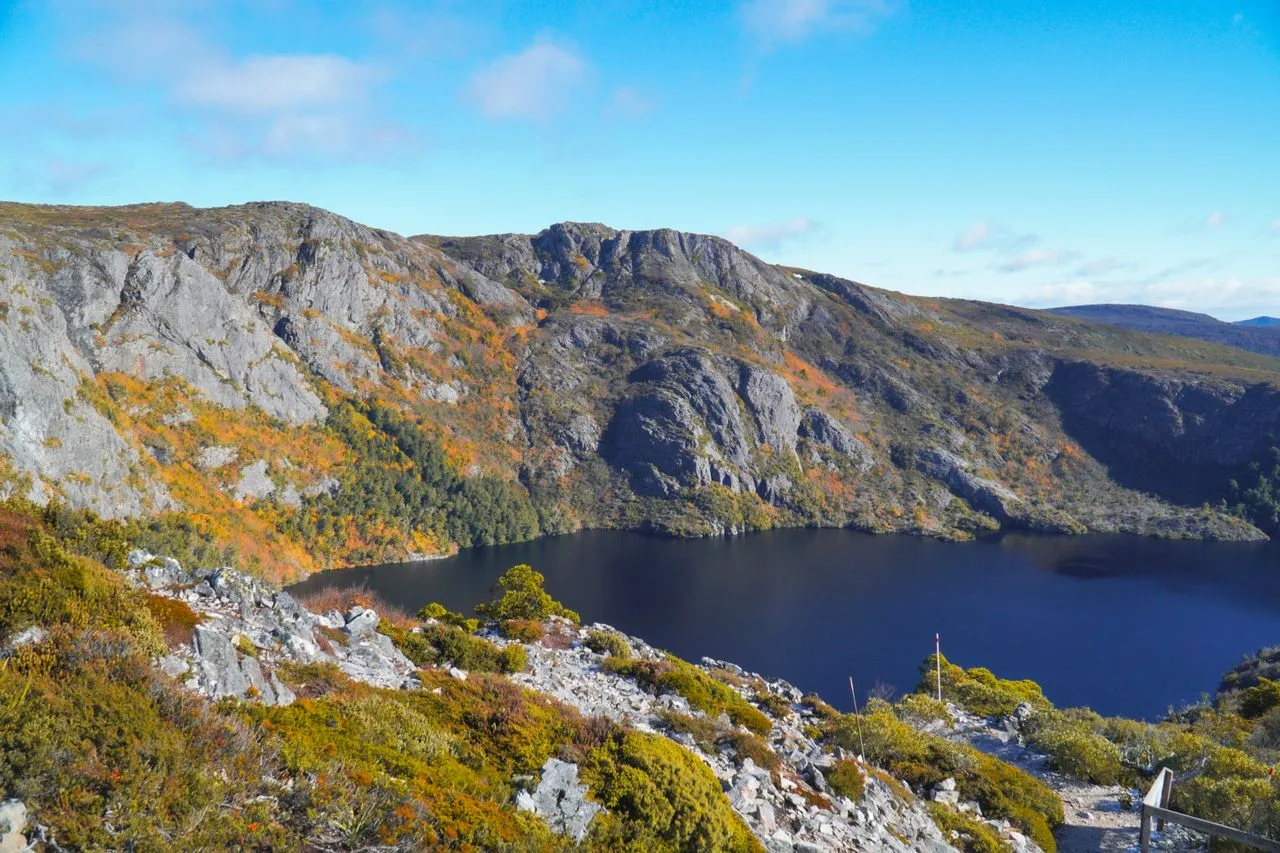
The Dove Lake Circuit (about 6 km, 2–3 hours) is the classic walk, with the mountain reflected in the water on calm mornings. For a bigger view, add the steep climb to Marion's Lookout. At dusk, wombats graze around Ronny Creek — keep your distance and never feed them.
Weather changes fast here. Snow in December isn't unheard of, so carry a waterproof jacket on every walk.
Day 7: Launceston and departure
Finish in Launceston with a morning walk through Cataract Gorge, a short stroll from the city centre. Launceston airport has domestic connections, or loop back to Hobart in about 2.5 hours.
Practical tips
- Getting there: Most visitors fly into Hobart and hire a car. The Spirit of Tasmania ferry from Geelong suits those bringing a campervan.
- Parks pass: You need a Tasmania Parks Pass for Freycinet and Cradle Mountain. A Holiday Pass covers a vehicle for up to eight weeks.
- Season: December to March is warmest and busiest. Autumn (April–May) brings colour and calmer roads; winter is cold but atmospheric.
- Driving: Avoid driving at dawn and dusk where possible — Tasmania has a lot of wildlife on its roads.
Staying connected
Mobile coverage disappears in the central highlands and around parts of the east coast. Before you leave Hobart, download the Tasmania offline pack in Koalo so place stories and directions keep working when your signal doesn't.
Building a bigger trip? See The Perfect 2-Week Australia Itinerary and compare where to sleep in the Australia Accommodation Matrix.
Image Source: Anh Thu Le from Pexels
Questions people ask
- Is 7 days enough for Tasmania?
- It's enough for a satisfying first loop of the highlights. Ten days lets you add the west coast or Bruny Island without rushing.
- Do I need a 4WD in Tasmania?
- No. All the main roads in this itinerary are sealed and fine for a standard hire car.
- When is the best time to visit Tasmania?
- December to March for warm weather and long days; April and May for autumn colour and fewer crowds.
Heading there? Take Koalo with you.
Snap what you see and hear the story, free, in your language.
Open Koalo