


Outback & Culture
Sunrise at Uluru: What Nobody Tells You
Read in
The Koalo team 6 min read
Nobody tells you how cold it gets.
You picture the Red Centre as heat, and most of the year that's fair. But at five in the morning in July, in the desert, the temperature can sit just above freezing. People arrive at the sunrise viewing area in shorts and leave having learned something.
Bring a jacket. Bring a beanie if you have one. Bring a thermos.
The quiet before
The other thing nobody mentions is the silence. Before the sun, before the buses, there's a stillness out here that most of us never hear. A few birds. A breeze moving through the spinifex. Somebody whispering, because talking at a normal volume feels wrong.
Then the sky starts doing its thing behind you, and Uluru, which has been a dark shape on the horizon, begins to wake up.
Watch the colour, not the camera
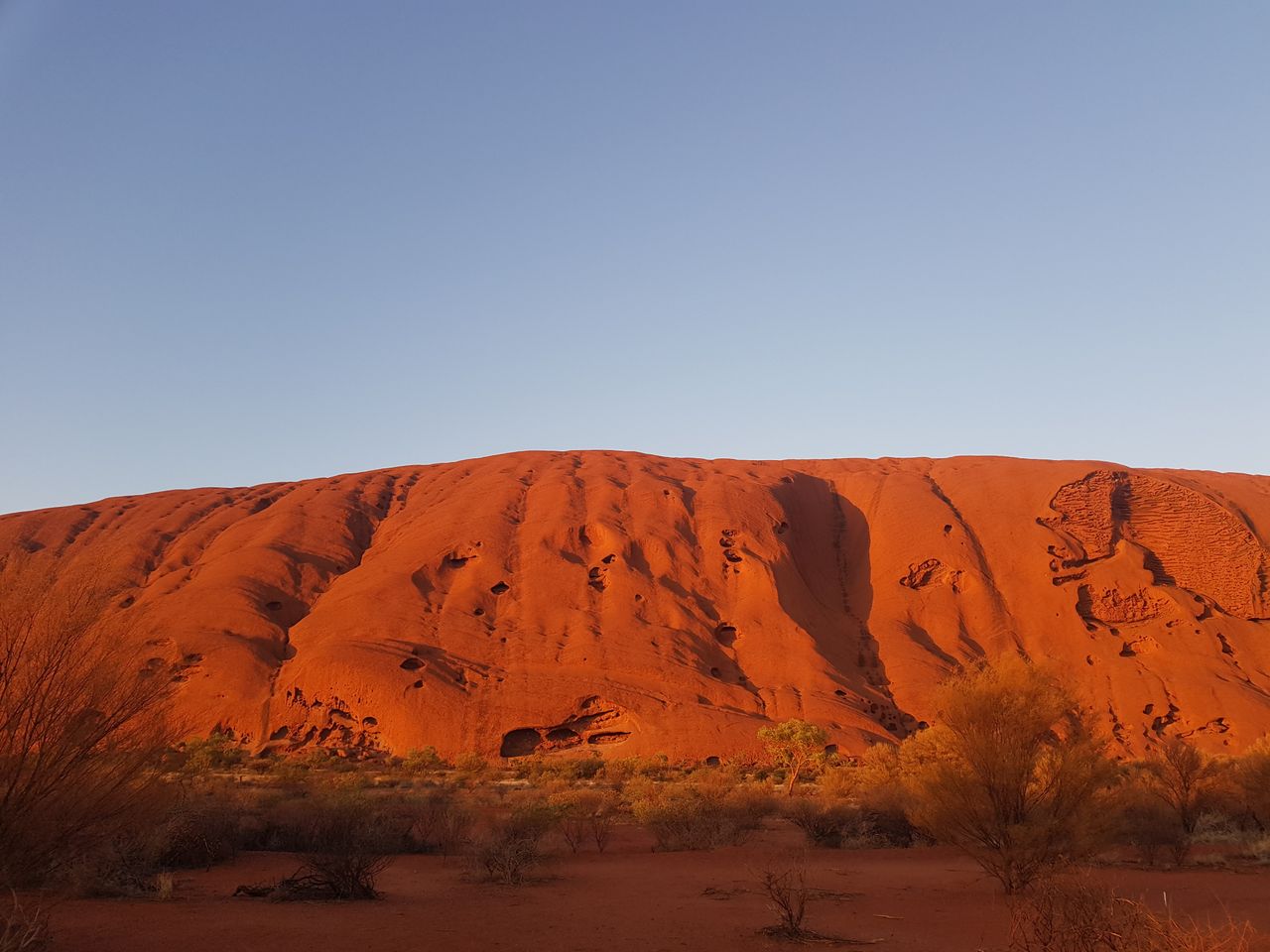
The rock doesn't turn red all at once. It goes through purple, a dusty mauve, then a deep rust, then orange, then a kind of glowing copper that looks unreal even when you're standing in front of it. Then it settles. The whole show takes about half an hour, and a surprising number of people leave after the first five minutes because they've got their photo.
Stay. Put the phone in your pocket for at least part of it.
Whose place this is
Uluru belongs to the Anangu, who have lived here for tens of thousands of years. It's woven through with Tjukurpa, the law and stories that explain how the land and everything on it came to be. Some parts of the rock are sacred and you'll see signs asking you not to photograph them. Respect that.
The climb closed in 2019. If someone tells you it's a shame, it isn't. Walk around the base instead. It's about ten kilometres, flat and easy, and up close you'll find waterholes, caves with rock art, and textures in the stone you'd never see from the viewing platform.
Kata Tjuta, the one people skip
Forty minutes west is Kata Tjuta, a cluster of 36 huge domes. The Valley of the Winds walk is, for many, more memorable than anything at Uluru itself. Go early. It closes when the temperature gets too high.
Small things that help
- Buy the park pass online before you arrive. It's valid for three days.
- Fly nets look silly and you will want one anyway.
- Drink more water than you think you need.
- The Cultural Centre is worth an hour. Go on day one, before the walks. It changes how you see everything after.
Open Koalo at the Cultural Centre and snap the rock from the car park. You'll get the story told the right way round, with the Anangu's own place at the heart of it.
Planning the practical side of this trip? Read Best Base Camps in Australia for Exploring the Great Barrier Reef & Outback and The Ultimate Australia Packing & Pre-Departure Checklist (2026 Edition).
Image source: Robyn Lodge from Pexels
Questions people ask
- Can you still climb Uluru?
- No. The climb closed permanently on 26 October 2019, at the request of the Anangu, for whom Uluru is sacred.
- Where is the best place to watch sunrise at Uluru?
- Talinguru Nyakunytjaku, on the eastern side. You see Uluru and Kata Tjuta together as the light comes up.
- How long is the Uluru base walk?
- About 10.6 kilometres, flat, and takes three to four hours. Start early in the warmer months.
Heading there? Take Koalo with you.
Snap what you see and hear the story, free, in your language.
Open Koalo