


Practical Tips
Where to Stay in Sydney/Melbourne: A First-Timer’s Neighborhood Guide
Read in
The Koalo team 5 min read
Navigating Australia's Great City Debate
Choosing where to stay in Sydney and Melbourne is rarely about finding a 'good' area, as both cities are well-serviced by public infrastructure. Instead, it is about aligning a neighbourhood with your specific travel style. While Sydney is defined by its dramatic topography and glittering harbour, Melbourne’s charm is often tucked into its grid-like laneways and sprawling creative precincts.
Before you book, consider that these cities are geographically large. Where you choose to sleep dictates whether your morning begins with a walk to the Opera House or a significant train journey from a residential suburb. This guide evaluates the central hubs and residential pockets to help you choose the right base for your two-week Australia itinerary.
Sydney: Harbour Views versus Local Vibes
Sydney’s geography is dominated by the water. For a first-timer, staying near the harbour simplifies logistics, but venturing further inland reveals the city’s culinary heart. When planning your arrival, consider the hidden costs of flying to Australia, such as airport station access fees, which vary by location.
The Rocks and Circular Quay
This is the historical core of the city. Staying here puts you within walking distance of the Sydney Opera House and the harbour trails. The Rocks is famous for its cobblestone lanes, weekend markets, and colonial-era pubs.
- Best for: Proximity to major landmarks and the ferry terminal.
- Trade-off: High demand typically leads to premium pricing and a busy atmosphere.
Sydney CBD (Central Business District)
The CBD is the commercial heart, running from Circular Quay down to Central Station. It offers the highest density of high-rise hotels. It is a practical location for those who need easy access to the airport rail link.
- Best for: Central transport connections and major retail hubs.
- Trade-off: Some areas can feel quiet or corporate during weekend evenings.
Surry Hills
If you prefer terrace houses and boutique stays over glass towers, Surry Hills is a popular choice for food enthusiasts. It is home to various brunch spots and small bars, located just uphill from Central Station.
- Best for: A residential feel with independent boutiques and diverse dining.
- Trade-off: Hilly terrain and a longer walk or a transport journey to the harbour; check from your actual accommodation.
The Beach Suburbs (Bondi and Manly)
Many travellers seek to stay by the ocean. Bondi offers a famous surf culture, while Manly provides a relaxed atmosphere accessible by a ferry service from Circular Quay.
- Best for: Direct access to coastal walks and beaches.
- Trade-off: The commute. Staying at the beach means you will spend significant time on public transport to reach central city sights.
Melbourne: Laneways and Cultural Hubs
Melbourne is often described as the country’s cultural capital. Unlike Sydney’s harbour focus, Melbourne is a city of distinct districts connected by an extensive tram network.
Melbourne CBD
For a first visit, the CBD is a logical choice. The Melbourne suburb guide highlights the city's grid layout, which makes it straightforward to navigate. A notable feature is the Free Tram Zone, which allows travel on trams within the designated CBD and Docklands boundaries without a fare card, provided the entire journey remains within the zone.
- Best for: Accessibility, laneway culture, and the theatre district.
- Trade-off: Potential for street noise and fewer large green spaces compared to the city fringes.
Southbank and South Wharf
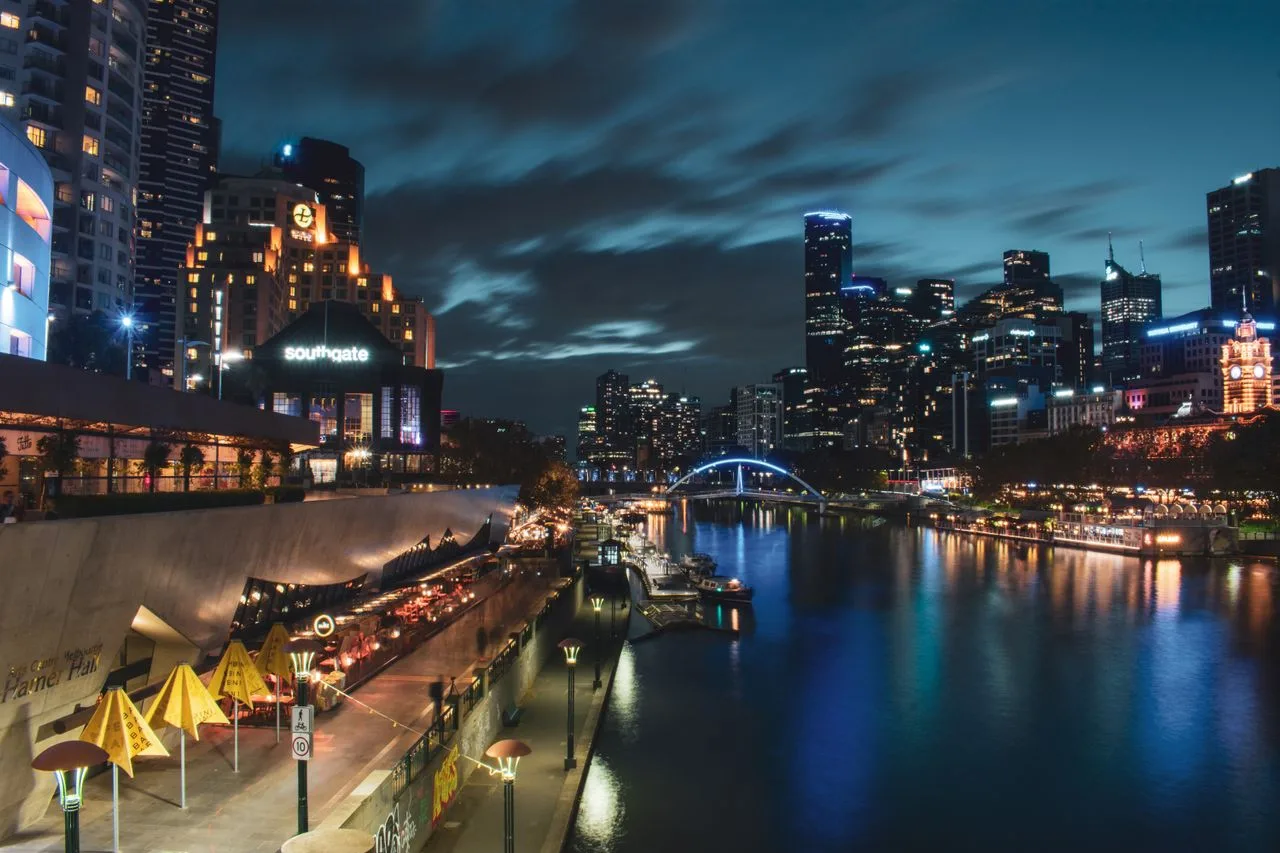
Located across the Yarra River from the CBD, Southbank is home to the Arts Centre and a polished waterfront promenade lined with restaurants.
- Best for: River views and proximity to the Convention and Exhibition Centre.
- Trade-off: Lacks some of the historic architecture found in the northern suburbs.
Fitzroy and Collingwood
According to Melbourne neighbourhood guides, Fitzroy is one of the city's oldest suburbs and serves as a creative hub. Expect street art, vintage shops, and a concentration of cafés and live music venues.
- Best for: Experiencing the local arts scene and independent retailers.
- Trade-off: Fewer large-scale hotels; accommodation is predominantly apartments or small guesthouses.
St Kilda
Melbourne’s seaside suburb is known for its beachside promenade and the historic Luna Park. It has a bohemian character that appeals to a wide range of travellers.
- Best for: Sunset views and coastal walks.
- Trade-off: It is located outside the Free Tram Zone and requires a tram journey to reach the city centre.
Decision Criteria: Sydney vs. Melbourne Stays
When comparing the two, your choice of Australia accommodation will vary based on your priorities. Sydney stays are often selected for proximity to iconic landmarks, whereas Melbourne stays are often selected for the urban atmosphere.
- Transport: Melbourne’s Free Tram Zone is a benefit for those staying in the CBD. Sydney’s Opal system is efficient, though it does not offer a free central zone. Check with local transport operators for current fare structures.
- Accessibility: Sydney is quite hilly, especially around The Rocks and Surry Hills. Melbourne’s CBD is largely flat, which may be a consideration for those with mobility requirements.
- Booking: For peak events, ensure you have reviewed your pre-departure checklist to secure central accommodation well in advance of local holidays.
To discover more about the stories behind these streets, you can use the Koalo website to find location-based narratives. Saved content can be accessed offline, though interactive features require a data connection.
Sources and Planning Notes
This guide was synthesised from official tourism resources, including Sydney.com and Visit Victoria, to ensure geographic accuracy regarding transport zones and district characteristics. Practical details, such as the boundaries of the Melbourne Free Tram Zone and Sydney ferry schedules, are subject to change by transport authorities. Travellers should reconfirm specific hotel amenities, local accessibility, and current pricing directly with providers before booking. This guide does not constitute a safety endorsement of any specific property. Note that medicine exemptions for travellers typically apply for up to three months and are subject to specific product regulations. Emergency calls to 000 require a reachable mobile network and are not guaranteed in off-grid areas.
Read next
For more detail on a place in this guide, read Melbourne laneways, coffee and slang.
Explore Koalo for photo stories and saved places. Download available offline content before losing reception; new AI requests require a connection.
Image source: Photo by Costa Karabelas from Pexels
Questions people ask
- Is it better to stay in Sydney or Melbourne first?
- Both are excellent entry points. Sydney offers iconic harbour landmarks, while Melbourne provides a focus on cafe culture, arts, and laneways.
- How does the Melbourne Free Tram Zone work?
- It allows free travel on trams within the designated CBD and Docklands areas. You do not need to tap a fare card if your entire journey stays within this zone.
- Which Sydney area is best for families?
- Darling Harbour is pedestrian-friendly and central, while Manly offers a seaside atmosphere reachable via a scenic ferry journey.
- Are these cities walkable?
- Melbourne's CBD is very walkable due to its flat grid. Sydney's CBD is also walkable but involves steep hills and stairs, particularly in the historic Rocks area.
- Can I stay in one suburb and see both cities?
- No. Sydney and Melbourne are approximately 900km apart. You will need to book separate accommodation in each city to explore them effectively.
Heading there? Take Koalo with you.
Snap what you see and hear the story, free, in your language.
Open Koalo