


Road Trips
The Great Ocean Road, Beyond the Twelve Apostles
Read in
The Koalo team 7 min read
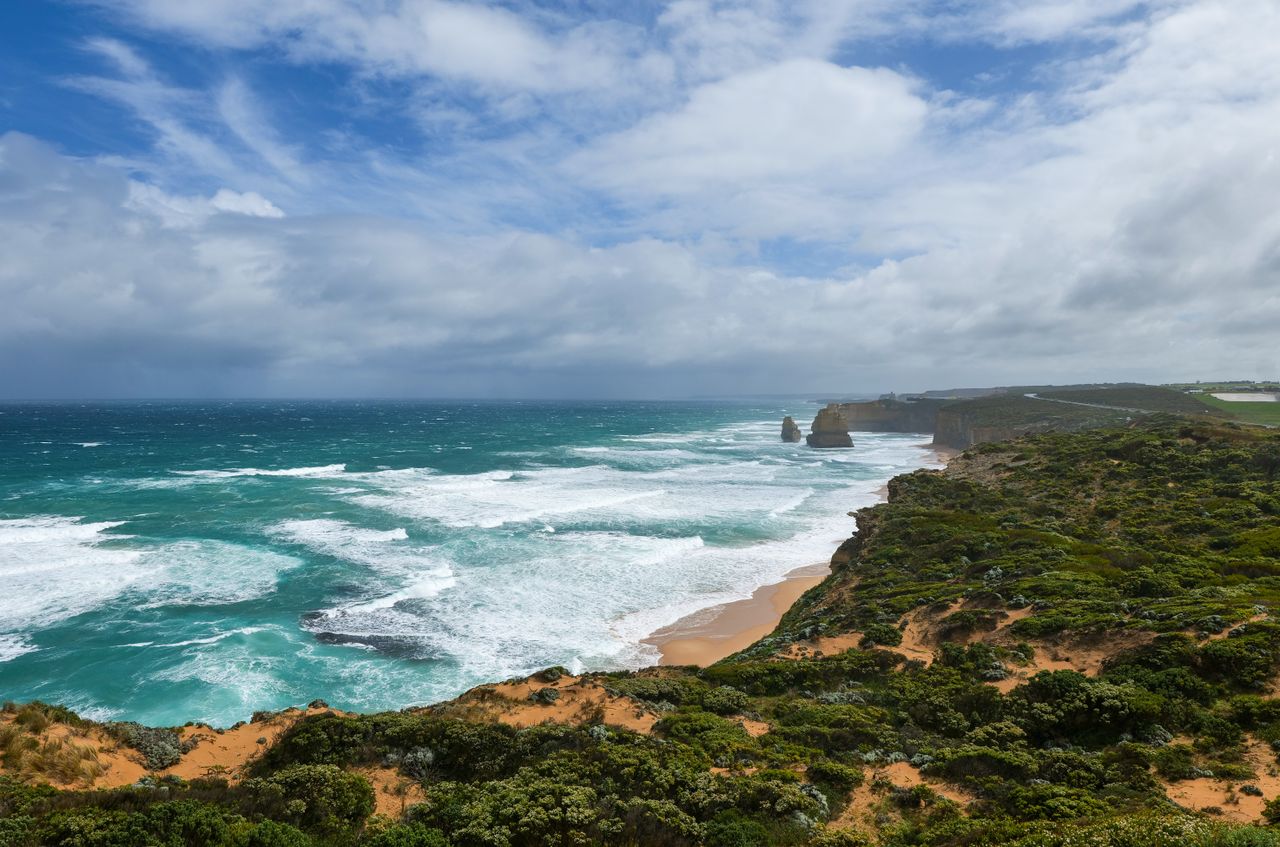
The first thing you notice isn't the view. It's the wind. It comes straight off the Southern Ocean, and the next landmass it would hit, if you kept going, is Antarctica. You can smell the salt before you can see the water.
Most people treat the Great Ocean Road as a single photo: the Twelve Apostles at sunset, phone held high over a crowd of other phones. That photo is worth taking. But the road itself is 240 kilometres long, and the Apostles sit right near the end of it. If they're all you see, you've missed most of the point.
Start slow at Torquay
Torquay is surf town first, tourist town second. Grab a coffee, wander down to Bells Beach, and watch the locals paddle out before you even think about the car. The road officially begins a few minutes west, under a wooden memorial arch built to honour the returned soldiers who carved the road by hand after the First World War. Pick-axes, shovels, and small explosives. That's how this thing got here.
Lorne, then the bends
Past Anglesea the road starts to wind properly. Lorne is the natural lunch stop. Then comes the stretch everyone remembers: cliffs on one side, a drop into blue on the other, and corners that make passengers go quiet.
Pull over at Teddy's Lookout just behind Lorne. Most coaches don't bother, so you'll often have it to yourself.
Kennett River and the koalas
Turn up Grey River Road at Kennett River and drive slowly with the window down. Look up. Koalas sleep wedged in the forks of the manna gums, round and grey and completely indifferent to you. You'll also hear king parrots and the odd crimson rosella, who are less indifferent and will happily land on your arm if someone nearby has seed. Please don't feed them.
Apollo Bay to the Otways
Apollo Bay is where to spend your first night. In the morning, head inland into the Great Otway National Park. It feels like a different country: tree ferns taller than a bus, moss on everything, the drip of water off leaves. Maits Rest is a short boardwalk loop through rainforest that has barely changed in a thousand years.
The Apostles, done properly
Go at sunrise. Walk down the Gibson Steps, 86 of them cut into the cliff, and stand on the beach looking up at the limestone stacks. At dawn, the colours are gentler and the car park is nearly empty.
There are fewer than twelve now, by the way. There probably never were twelve. The sea takes one every so often, and nobody seems too bothered about updating the name.
Keep driving
This is the bit most people skip. Loch Ard Gorge, a few minutes on, has a shipwreck story that will stay with you. Then London Bridge, which famously lost its middle span in 1990 and stranded two tourists on the far side until a helicopter came. Then the Bay of Islands, quieter, wider, and in some lights more beautiful than anything back east.
A few practical notes
- Fill up in Apollo Bay. Fuel gets scarce and pricey past Princetown.
- Phone reception drops out in the Otways. Download your maps and audio before you go.
- Drive on the left, give way to tour buses on bends, and never stop on the road for a photo.
If you're using Koalo, snap the arch at the start, and again at Loch Ard Gorge. The stories behind both are better than any sign can tell you.
Planning the practical side of this trip? Read Australia Accommodation Matrix: Luxury Hotels vs. Campervans vs. Eco-Lodges and Meeting Australian wildlife without crowding it.
Image source: Mark Direen from Pexels
Questions people ask
- How many days do you need for the Great Ocean Road?
- Two nights is the honest minimum. One day is possible but you will spend most of it behind the wheel.
- Which direction should you drive it?
- Torquay to Warrnambool, east to west. You sit on the ocean side of the road, which makes the lookouts easier to pull into.
- Where can you see wild koalas on the Great Ocean Road?
- Kennett River, along Grey River Road. Look up in the manna gums a few hundred metres from the caravan park.
Heading there? Take Koalo with you.
Snap what you see and hear the story, free, in your language.
Open Koalo