


Practical Tips
Driving in Australia for Tourists: Road Rules, Outback Hazards & Campervan Realities
Read in
The Koalo team 9 min read
Licence and legal basics
Visitors can generally drive in Australia on a current overseas licence for the length of their visit (rules vary slightly by state for long stays). If your licence isn't in English, carry an International Driving Permit or an official translation alongside it.
A few rules catch visitors out:
- Alcohol: The general limit is 0.05 blood alcohol. Random breath testing is common, even mid-morning.
- Phones: Holding your phone while driving is illegal, including at traffic lights. Several states use cameras that detect it automatically.
- Speed: Limits are strictly enforced with fixed, mobile and average-speed cameras. School zones (usually 40 km/h at set times) are heavily policed.
Everyday driving
Keep left, and give way to the right at roundabouts. Indicate when leaving one. In central Melbourne you'll meet the famous hook turn: to turn right at signed intersections, you move to the far left, wait, and turn when the lights on your target street change.
Toll roads in Sydney, Melbourne and Brisbane are cashless. Ask your hire company how tolls are billed so you don't get surprise fees.
Regional and outback realities
Road trains
Outside cities you may share the road with road trains up to 53 metres long. Only overtake with a long, clear stretch ahead, and expect to need far more distance than for a car. On narrow roads, slow down and move left when one approaches. Never cut in front of one — they need a long distance to stop.
Fuel and water
When a sign says "next fuel 200 km", fill up. Remote roadhouses may close early. Carry plenty of water, and if you break down in the outback, stay with your vehicle.
Unsealed roads
Many hire contracts exclude damage on unsealed roads. Check before you set off on a gravel shortcut, and slow right down — loose surfaces cause rollovers.
Wildlife at dawn and dusk
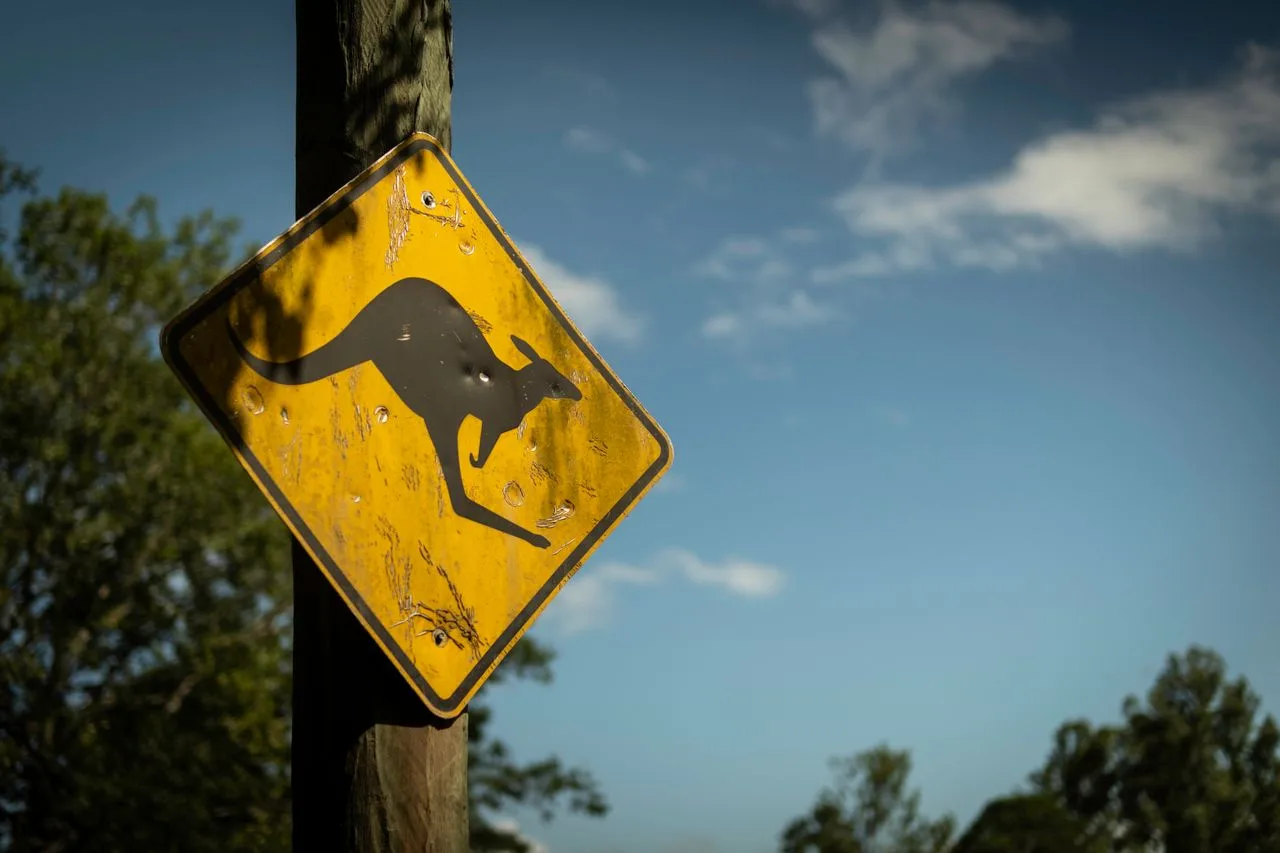
Kangaroos, wallabies, wombats, emus and cattle are most active around sunrise and sunset. Locals avoid long country drives at those times. If an animal appears, brake firmly in a straight line rather than swerving.
Campervan realities
Campervans are taller, slower and more affected by wind than you might expect. Allow more time, use designated campgrounds (free camping isn't allowed everywhere), and plan dump-point stops.
Plan for signal gaps
Coverage drops quickly outside towns. Download maps and offline content before leaving. Koalo's hands-free, location-triggered narration means you can hear about the places you pass without looking at your screen while driving.
Planning a drive? Read The Great Ocean Road, Beyond the Twelve Apostles, A quieter way to travel the Red Centre and the Australia Packing Checklist.
Image source: Nate Biddle from Pexels
Questions people ask
- Can I drive in Australia with an overseas licence?
- Yes, for visitors in most cases. Carry an International Driving Permit or official translation if your licence isn't in English.
- What should I do if a kangaroo jumps in front of my car?
- Brake firmly and stay in your lane. Swerving often causes worse crashes than a collision.
- Do I need a 4WD for the Great Ocean Road or the Red Centre?
- No for the Great Ocean Road and the main sealed Red Centre roads. Some unsealed routes, such as parts of the Mereenie Loop, require one.
Heading there? Take Koalo with you.
Snap what you see and hear the story, free, in your language.
Open Koalo